
Culture · 7 November 2026
2026, the Year Gen Z Took to the Streets (and One Movement Won an Election)
From Belgrade to Berlin, young people took to the streets with different demands. In Serbia, a student movement even won an election.
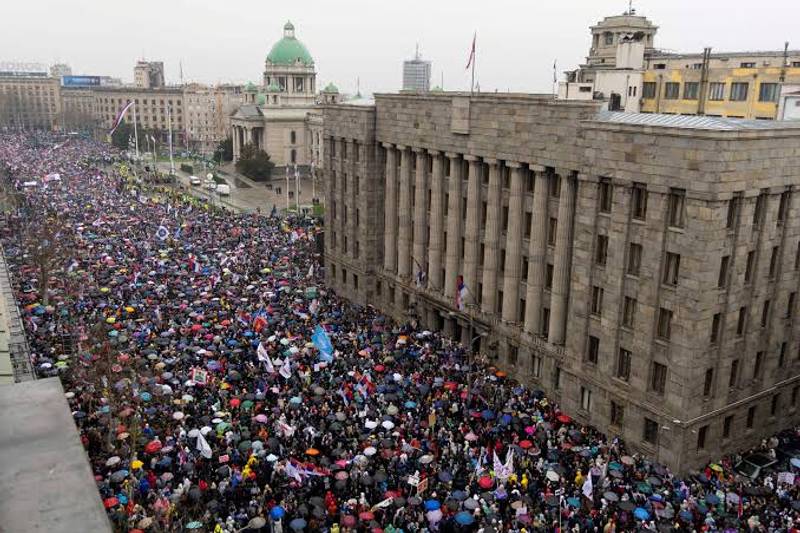
If you opened social media at the end of October, chances are you saw two kinds of videos circulating almost at the same time. One: a sea of people in Belgrade celebrating something that seemed impossible two years ago. Two: rows of young people in Berlin and other German cities holding signs, some in Halloween costumes. Two events, two countries, one generation.
Start with Serbia, because it's the most dramatic story. It all began with a tragedy in November 2024, when a railway station canopy in Novi Sad collapsed and killed 16 people. Students took to the streets demanding accountability, and the protests didn't die down. For almost two years the movement stayed alive, then changed shape into an electoral contender under the name Student List. In the snap parliamentary election on October 25, 2026, the list won around 52 to 53 percent of the vote and 140 of 250 seats, enough for an outright majority without a coalition. Aleksandar Vučić, whose party had dominated Serbian politics since 2012, conceded the same night.
What makes this story interesting isn't just the result, it's who's on the list. Many outlets described their candidates as a mix of lecturers, artists, and ordinary citizens with little political experience. That's also the source of a big question. Observers have already warned that winning an election and running a country are two very different jobs. Protest movements are usually strong at rejecting something, but governing takes agreement, compromise, and policy that actually works. The real test is just beginning.
Then Germany. On October 31, a youth initiative called "Gen Z regelt", roughly "Gen Z takes charge", held simultaneous rallies in more than 30 cities. The dpa news agency estimated around 120,000 people took part. The demands were fairly concrete: the rising cost of living, cuts to education and social services, and opposition to plans for compulsory military service. Organizers openly called for peaceful protest and rejected violence, but in some cities there were still clashes and looting by some participants. Germany's education minister condemned the riots, but also said the issues the young people raised need to be taken seriously. Interestingly, the official school students' organization kept its distance and planned its own day of action on November 20.
Germany wasn't the first this year. France and Italy also saw demonstrations over living costs and military budgets, and the German protests have widely been read as part of the same wave across Europe.
Why does this matter to us here? Not because I want to say every protest is right or every demand makes sense. That's for you to judge, and every country has its own context. What interests me is the pattern. A generation often labeled apathetic, too busy with their phones, and only interested in content turns out to be able to organize across cities quickly, mostly through social media. And in Serbia, that energy didn't stop on the street, it made it into the ballot box.
There's a dark side too. Movements without clear leaders are easy to infiltrate, easy to spin, and easy to lose direction once the euphoria fades. Riot footage always goes viral faster than the actual demands, and that can drown out the real message.
The heavy music scene has a long history with protest. Punk and hardcore were born out of disgust with the way things are, and many songs we shout at gigs talk about the same things as the signs in Berlin: life getting more expensive, an unclear future, and the feeling of not being heard. The difference is that this time the lyrics were written on banners and carried into the streets.
One thing we can learn from all this without taking anyone's side: young people's voices exist, and they turn out to be pretty loud. The question is what they'll be used for.
Read next
Get the monthly digest by email