
Music · 15 November 2026
Haul and Magna Kalahar: Fourteen Years, Ten Songs, No Small Talk
Haul's second album lands 14 years after their debut. Psychedelic, but never long-winded. Notes on Magna Kalahar and a band bending its own language.
VerdictFourteen years, paid back with a dense, dark record that won't sit in a box.
Fourteen years is a long time. In that stretch Indonesia changed presidents twice, you probably went through three phones, and who knows how many bands formed and split before they ever hit record. Haul, a Bandung band formed in 2010, needed all of it to follow up their 2012 debut, Rima Penghitam Cakrawala.
The result is Magna Kalahar, out on Disaster Records on 29 October 2026. Ten songs, roughly 46 minutes, on cassette, CD, vinyl and digital. The full spread, like a band that knows its listeners still want something to hold.
Haul never fully vanished in the gap. There were two splits in 2013, the Death from Beyond EP (2016), the Adamar EP (2023), and three singles through 2026. But a full-length is a different test. That's where a band can't hide behind three good songs.
Haul used to slot easily onto the black-metal-meets-punk shelf. The tag now is psychedelic black/death, and the band itself calls Magna Kalahar more varied and more psychedelic than anything before it. In metal, "psychedelic" is usually a warning sign: ten-minute songs, delay pedals everywhere, and a crowd that starts checking its phones.
On paper, Magna Kalahar sidesteps the trap. The longest track, Benam, stops short of six minutes. The shortest, Sekapur Sirna, sits around three and a half. I read the tracklist twice, convinced I'd missed something. I hadn't. The psychedelia is compressed, not stretched out, and that's a rare call to make.
Another interesting call sits in the producer's chair. Alyuadi Febryansyah, guitarist of Bandung shoegaze band Heals, produced and mixed the record. Mastering was handled by Jamie Elton at Ostronet Studio in Sweden. A shoegaze guy behind the desk for a black/death band sounds odd, and that's exactly the bet: texture and space, not just volume.
Then there's the language. Every song title is in Indonesian, and several are deliberately bent. Sekapur Sirna twists "sekapur sirih", the phrase for a book's opening foreword, into something closer to "a foreword that fades". Matasayat, Tanasalarasa, Omegat Roh, Menjilat Sangrawi: these read like incantations assembled from torn-out dictionary pages. In a scene that still often feels tougher in English, that's a stance.
The context isn't neutral either. Haul started the album at the tail end of the pandemic, and they've said the political climate that followed, the 2024 presidential election included, seeped into the material. No title shouts about politics. What you get instead is ruins, collapse, and an order being swallowed by the dark. For anyone living in Indonesia in 2026, that's not a distant metaphor.
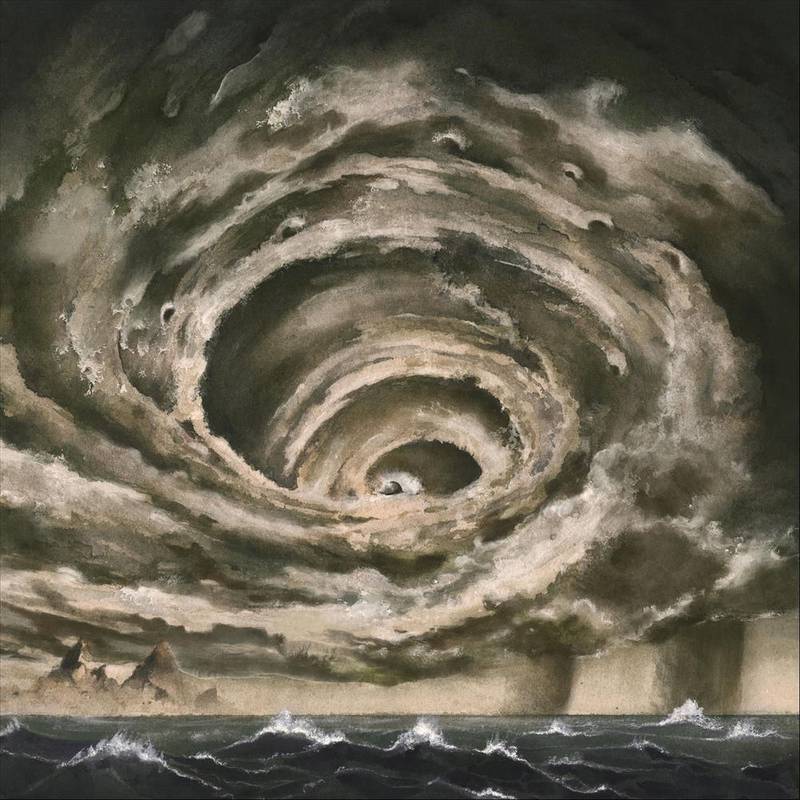
One guest comes in on Benam: Marshella Safira of Mooner, who adds vocals to the track that was also released as a single on 24 October. The cover is a painting by Morrgth. Both details show Haul aren't working in a sealed room. They pull in people from outside the metal circle without apologising for it.
Records like this rarely pop up in your feed. They live on small labels, merch tables by the stage, and people willing to go looking. If you only wait for the algorithm to serve you something, Magna Kalahar will probably slip right past, and that's your loss, not Haul's.
The risks are real. Ten songs of near-identical length can blur into one long block if the dynamics aren't sharp enough. Older fans who fell for Haul's punk side may feel left behind. Those assembled titles can also be a wall for anyone too lazy to dig. And a 14-year wait pushes expectations sky high, which rarely does anyone any favours.
But a second album this late shouldn't sound like debut part two. Haul came back as a different band, and for once, that's good news.
Get the monthly digest by email